Valentine’s Day was one of my favorite holidays when I was younger. I loved the celebrations at school and the special treats that came with them!
Below are five easy and engaging ways to incorporate Valentine’s Day into your speech therapy sessions, with ideas for skills to target and goals to address along the way.
Speech Therapy Activities for Valentine’s Day
1) Valentine’s Day Books
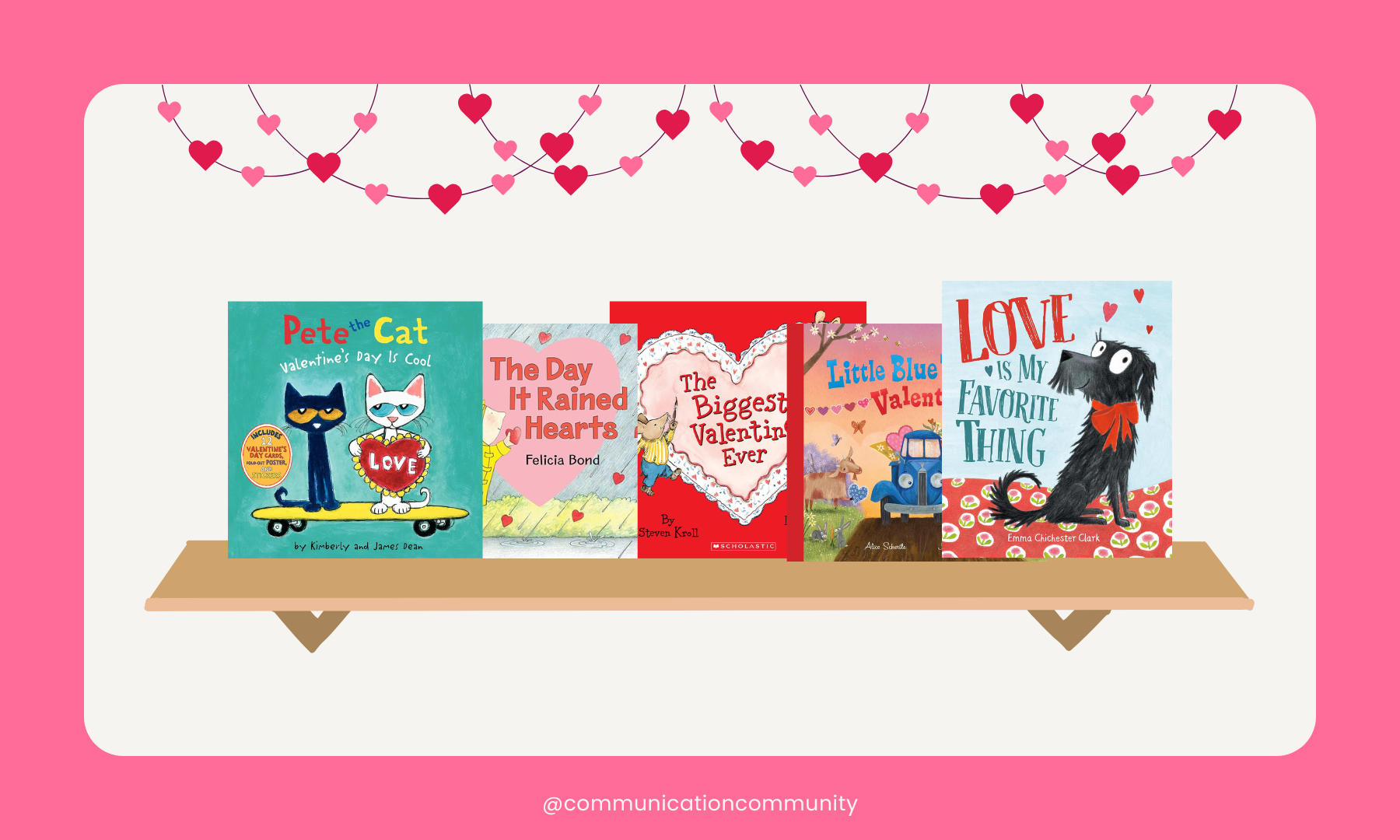
We love using children’s books in our speech therapy sessions, and Valentine’s Day-themed ones are perfect for working on goals while also celebrating the holiday. They’re great for group sessions and targeting different goals with different clients as well!
Some favorites include:
- The Day it Rained Hearts
- Little Blue Truck’s Valentine
- Love Is My Favorite Thing
- The Biggest Valentine Ever
- Pete the Cat: Valentine’s Day is Cool
Tip: You can find YouTube videos of the books read aloud if you are unable to get a hard copy.
Speech and language areas to target:
- Valentine’s Day vocabulary
- WH- questions
- Retelling
- Inferencing and predicting
- Main idea and details
- Speaking strategies
- Articulation (especially for generalization at the sentence level)
2) Valentine’s Day Crafts
Having clients make their own Valentine’s Day cards or crafts is a simple, hands-on way to embed language into a functional activity. Stickers and glitter are always a hit, but you can do plenty with just paper and markers, too!
If you are looking for fun materials, check these out:
Speech and language areas to target:
- Expressive language (formulating messages for cards)
- Following directions (completing a guided craft)
- Making requests for supplies
- Describing creations
3) Valentine’s Day Short Stories & Reading Comprehension Worksheets
Like picture books, but for older clients, short stories are great for targeting a variety of skills! We have a free Valentine’s Day short story with expressive comprehension questions available in our Teachers Pay Teachers store. And, inside our Premium Community, you’ll find even more Valentine’s Day resources, including additional stories, BINGO, coloring worksheets, and inferencing activities.
Speech and language areas to target:
- Vocabulary
- Inferencing
- Comparing and contrasting
- Themes
- WH- questions (including more complex ones, like Why and How)
- Retelling
- Main idea and details
4) History of Valentine’s Day
Incorporating nonfiction content is a favorite of mine in speech therapy sessions. You can target speech and language goals while also learning cool new facts, which feels like a win-win!
ReadWorks (free for educators) offers Valentine’s Day–themed passages, and there are also great kid-friendly videos available online. Read or watch together, then discuss what you learned.
- Readworks story
- National Geographic passage
- Video: Valentine’s Day History for Kids
- Video: History of Valentine’s Day for Kids
Speech and language areas to target:
- Temporal concepts
- Fact vs myth
- WH- questions
- Sentence formulation
5) Valentine’s Day Objects & Vocabulary
If your clients have already started their Valentine’s Day celebrations, you can make sessions extra functional by using what they bring in, such as cards, candy, or small treats. If not, pictures work just as well!
Speech therapy activity ideas:
- Sort cards by shape or color
- Sort items into edible vs. inedible
- Compare two Valentine items (e.g., chocolate vs. candy hearts)
- Describe similarities and differences
Valentine’s Day vocabulary to target:
- Chocolate, candy hearts, lollipops, stickers, temporary tattoos, cards, flowers, stuffed animals, balloons, decorations, party, dance, friendship, love, gratitude, kindness
Speech and language areas to target:
- Categories
- Similarities and differences
- Describing
- Quantitative and qualitative concepts
We hope you have a sweet Valentine’s Day!
This post contains some affiliate links and we may be (slightly) compensated if you use them, but all opinions are our own. We appreciate the support!